Stucco Expansion Joint Ring
Patent pending protection for pipes that pass through stucco walls.
Download brochure (PDF)Ask a question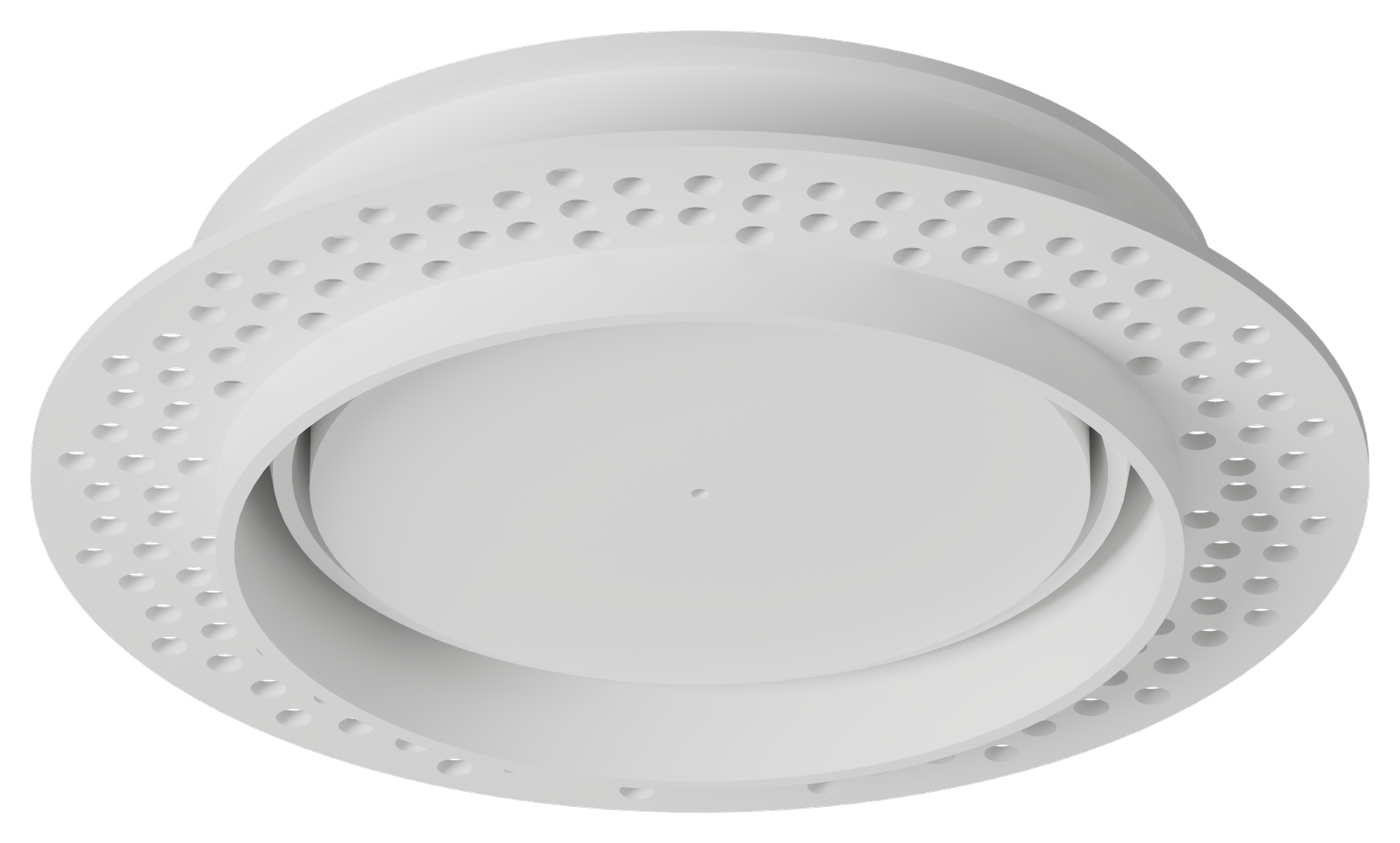
Product overview
The Stucco Expansion Joint Ring is a high-performance, polymer-based circular lathing and expansion accessory engineered for exterior Portland cement-based plaster (stucco), panel, and lap siding wall assemblies. It accommodates differential movement at pipe penetrations, vents, conduit, and other round openings while providing enhanced performance benefits over traditional field detailing.
It’s reversible for traditional stucco or elastomeric finishes. Seals out pests, corrosion, and protects pipe insulation. Two models cover penetrations from 3/8 of an inch up to 4 and a half inches for stucco siding, concrete, and CMU walls.
Key features & benefits
Reversible design
One side for traditional stucco, the reverse for elastomeric finishes and coatings.
Concentric flexible rings
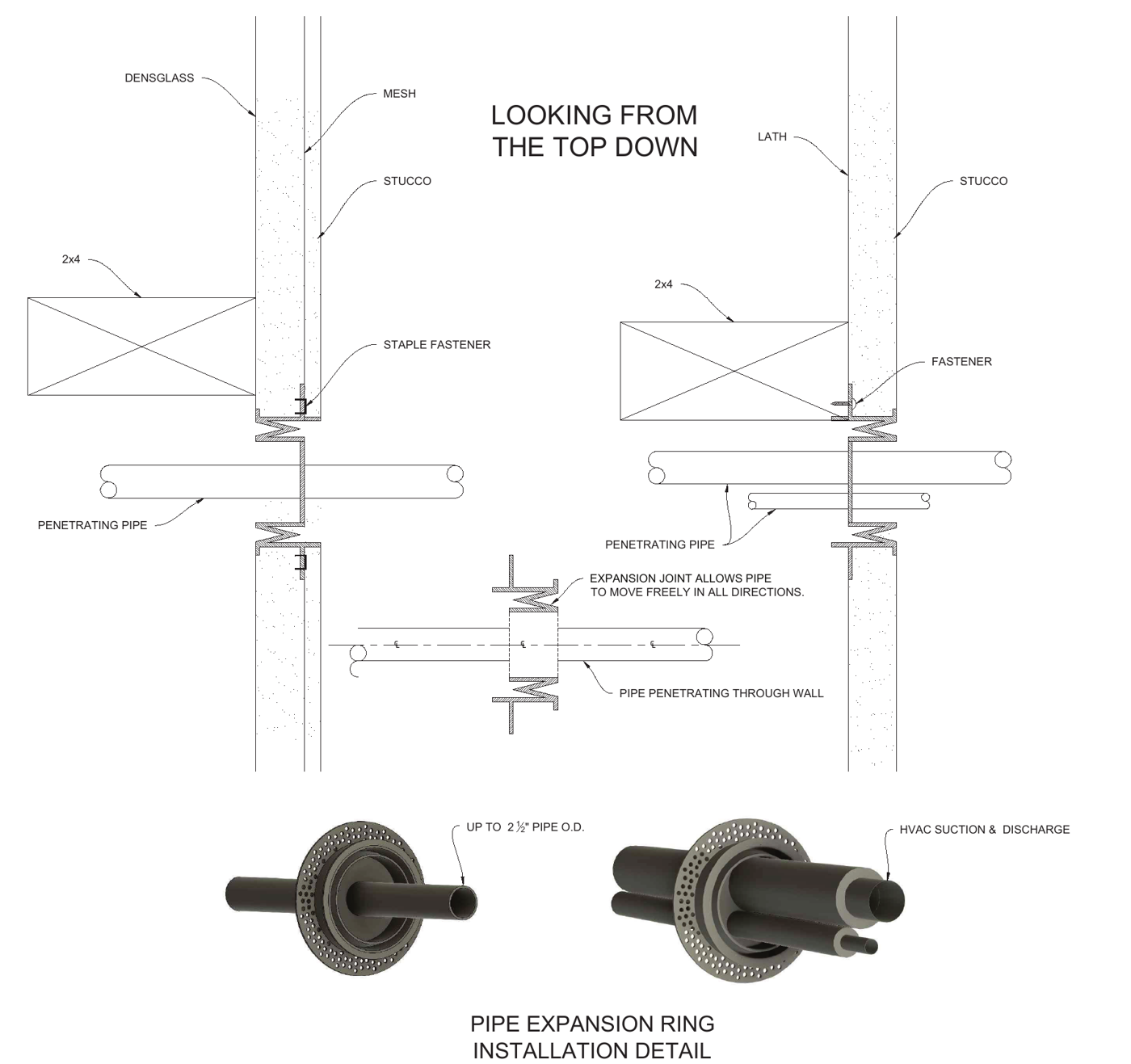
Absorb expansion and contraction movement (±1/8″ nominal).
Perforated flange
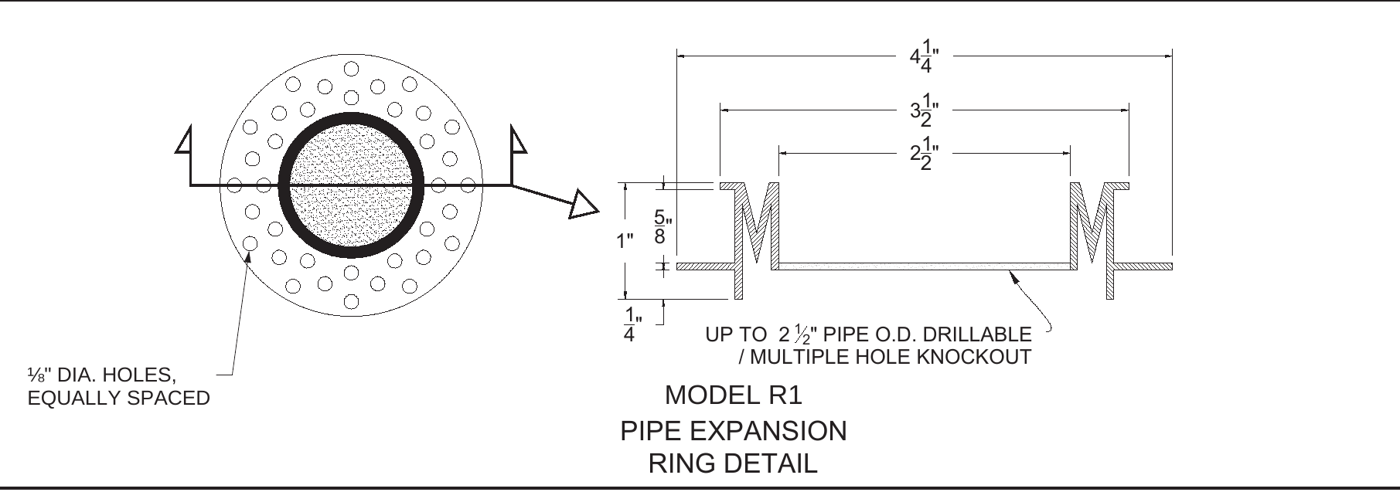
1/8″ holes, equally spaced, key into the base coat for secure attachment.
Pest protection
Seals the penetration to help reduce insect and rodent infestation and nesting.
Corrosion / electrolysis
Exterior-grade polymer resists cement alkalis, corrosion and electrolysis.
Protects insulation
Shields pipes and insulation from damage, compression and vibration.
Centers & stabilizes
In framed, concrete or CMU walls.
Drill-out center
Drill to the pipe O.D. — single hole or multiple-hole knockout for line sets.
Models
| Model | Pipe O.D. range | Center | Movement | Flange |
|---|---|---|---|---|
| R1 | 3/8″ – 2-1/2″ | Drill-out center | ±1/8″ nominal | 1/8″ holes, equally spaced |
| R2 | 2-3/4″ – 4-1/2″ | Drill-out center | ±1/8″ nominal | 1/8″ holes, equally spaced |
Each ring ships with a solid center: drill it out with a hole saw or step bit to match the pipe, conduit or insulated line O.D. Size for a snug fit that still lets the rings move, and deburr the edge to protect insulation.
How it works inside the wall
Ideal applications
- Stucco wall assemblies
- Panel and lap siding systems
- Concrete penetrations
- Metal framing and penetrations
- Pipe, vent, and conduit openings
Before & after
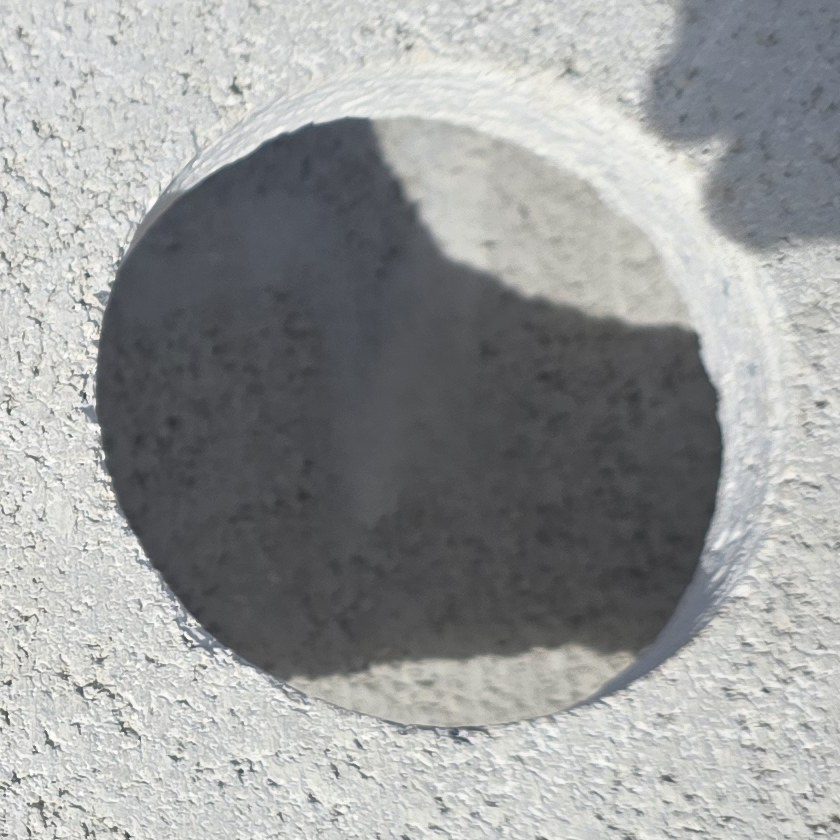
Unprotected drilled hole: nothing between the stucco and the pipe.
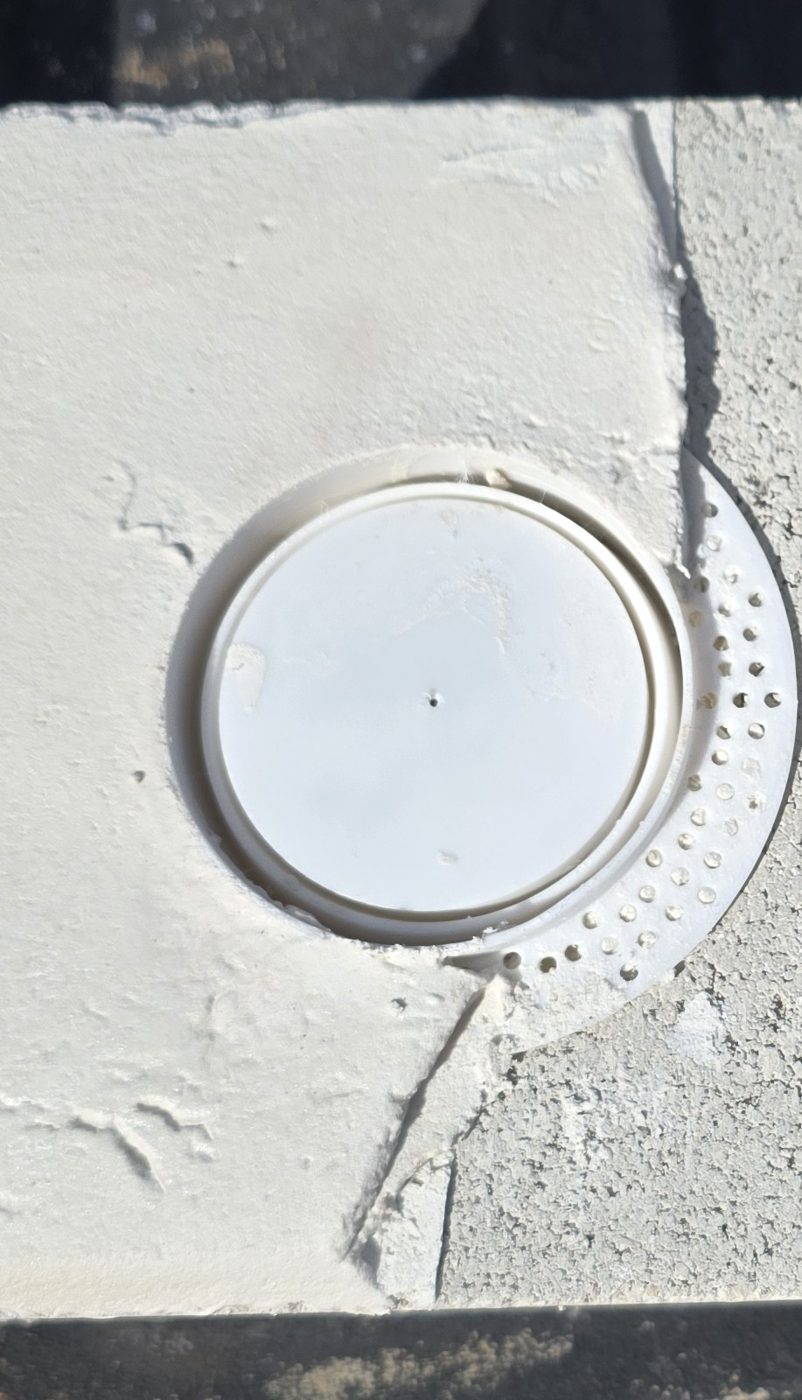
Ring set in stucco, not yet drilled.
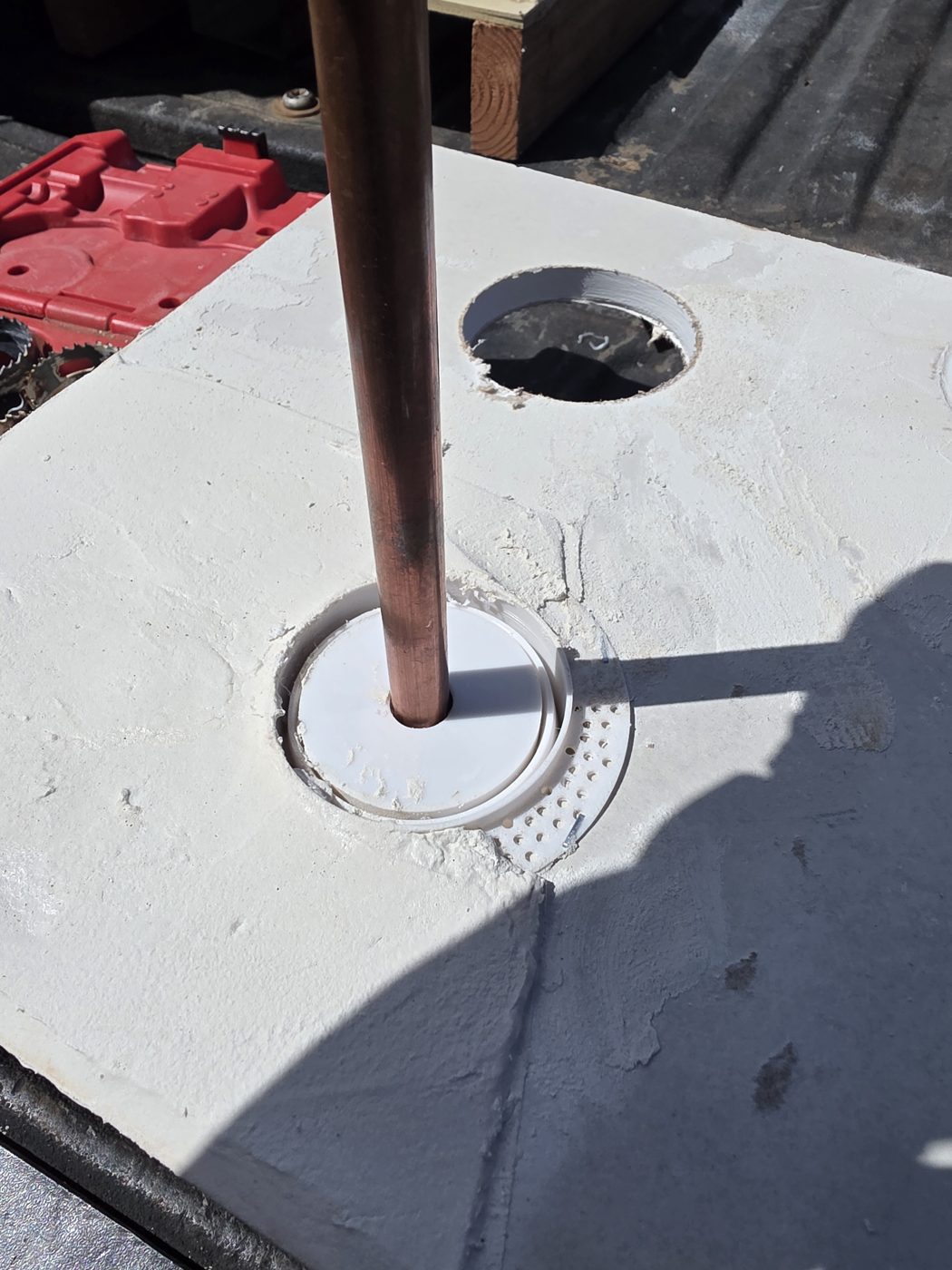
Pipe through the Stucco Expansion Joint Ring.
Installation at a glance
- Prepare. Prepare substrate, install WRB and flashing, center the pipe in the opening.
- Select size & side. Choose R1 or R2, drill out the center, pick stucco or elastomeric side out.
- Position. Slide the ring over the pipe; flange flat against lath or substrate.
- Secure. Fasten the flange per ASTM C1063 without restricting the rings.
- Integrate. Terminate lath at the joint; integrate siding transitions and flashing.
- Apply coats. Embed the flange in the base coat; work plaster into the perforations.
- Seal & inspect. Backer rod and sealant at the pipe; confirm rings move freely.
Materials & standards
- Designed as a polymer lathing/expansion accessory to meet ASTM C1861 material and performance requirements.
- Supports installation per ASTM C1063 (Sections 3.2.3, 6.2, 7.4.9, 7.4.10, 7.11).
- Compatible with galvanized lath, DensGlass, concrete and CMU substrates.
Packaging & notes
- Packaged 25 per protective bag; 200 per box. Store in a cool, dry place.
- Verify compatibility with pipe materials, insulation and the overall wall assembly.
- Fire resistance is achieved through the complete wall assembly per applicable codes.